
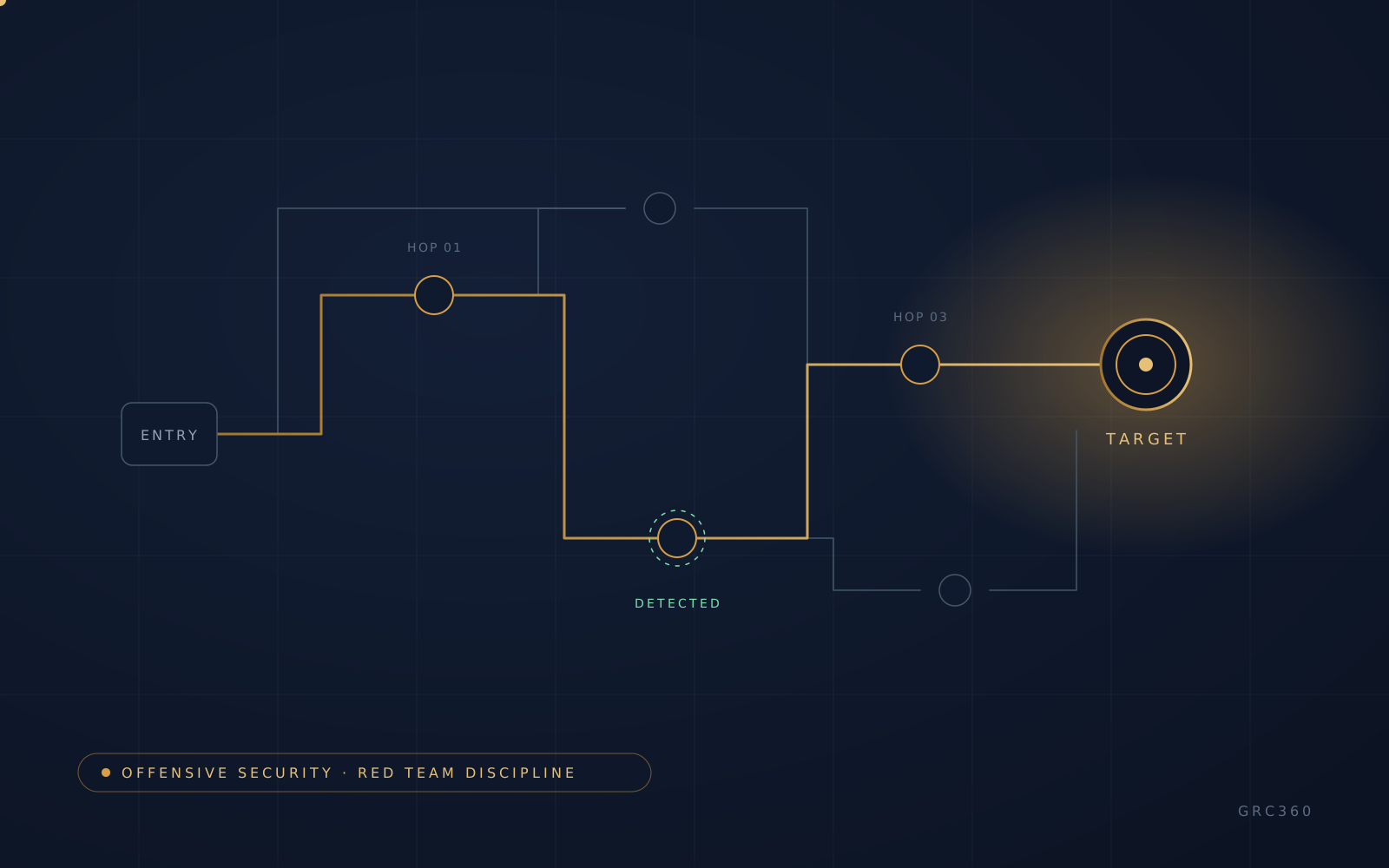
What is Penetration Testing?
Penetration testing, also known as ethical hacking, is a systematic way to check how secure your systems and applications really are. Rather than waiting for a breach, our team simulates the techniques a genuine attacker would use to find weaknesses first, so they can be fixed before they are exploited.
At GRC360, penetration testing is designed to do three things: identify vulnerabilities across your environment, validate the security measures you already have in place, and give you a clear, prioritized plan to improve your overall security posture. Our experienced testers combine the latest tools with industry-specific attack scenarios to deliver a thorough checkup of your defenses.
How a Penetration Test Works
Every engagement follows a structured, repeatable process so nothing is left to chance:
- Planning and reconnaissance — we agree the scope and objectives, then gather information about the target systems and their potential weaknesses.
- Scanning — we examine how your systems respond to probing and attempted breaches, mapping the weaknesses worth pursuing.
- Gaining access — we attempt controlled exploitation to understand the real-world impact of each vulnerability, such as data exposure or unauthorized access.
- Maintaining access — we test whether a foothold can be held over time, simulating how a persistent attacker would operate inside your environment.
- Analysis and reporting — we document what was found, what was accessed, and how, then translate it into clear remediation guidance.
Our Testing Methods
We tailor the engagement style to the assurance you need, from a purely external view to a fully collaborative exercise:
- External testing — targeting internet-facing assets such as websites, servers, and online services to prevent unauthorized access from outside the network.
- Internal testing — simulating an attacker who is already inside, uncovering weaknesses in workstations, internal servers, and resources reachable only from within.
- Blind and double-blind testing — carried out with minimal prior knowledge, and optionally without your team’s awareness, to give the most realistic measure of how prepared your defenders are.
- Targeted testing — a collaborative exercise with your security team, providing real-time feedback and a valuable opportunity to strengthen detection and response as issues are found.
What We Test
Our penetration testing services cover the full breadth of your attack surface:
- Network services — assessing vulnerabilities across your network infrastructure.
- Web applications — identifying and helping remediate flaws in your web-facing applications.
- Physical security — evaluating the controls that prevent unauthorized physical access.
- Remote access — checking remote connectivity mechanisms against external threats.
- Social engineering — testing and strengthening your defenses against attacks that exploit human trust.
What You Receive
At the end of every engagement we deliver a practical, actionable set of results — not just a list of findings:
- Executive summary — a clear, business-level overview of the results.
- Vulnerability inventory — every issue found, classified by how easily it can be exploited and how damaging it could be.
- Test protocol — the tools used, the areas checked, and the issues identified during testing.
- Remediation roadmap — prioritized, actionable recommendations to eliminate the vulnerabilities we uncovered.
Ready to see how your defenses would hold up? Speak to our team about a penetration testing engagement tailored to your environment.