
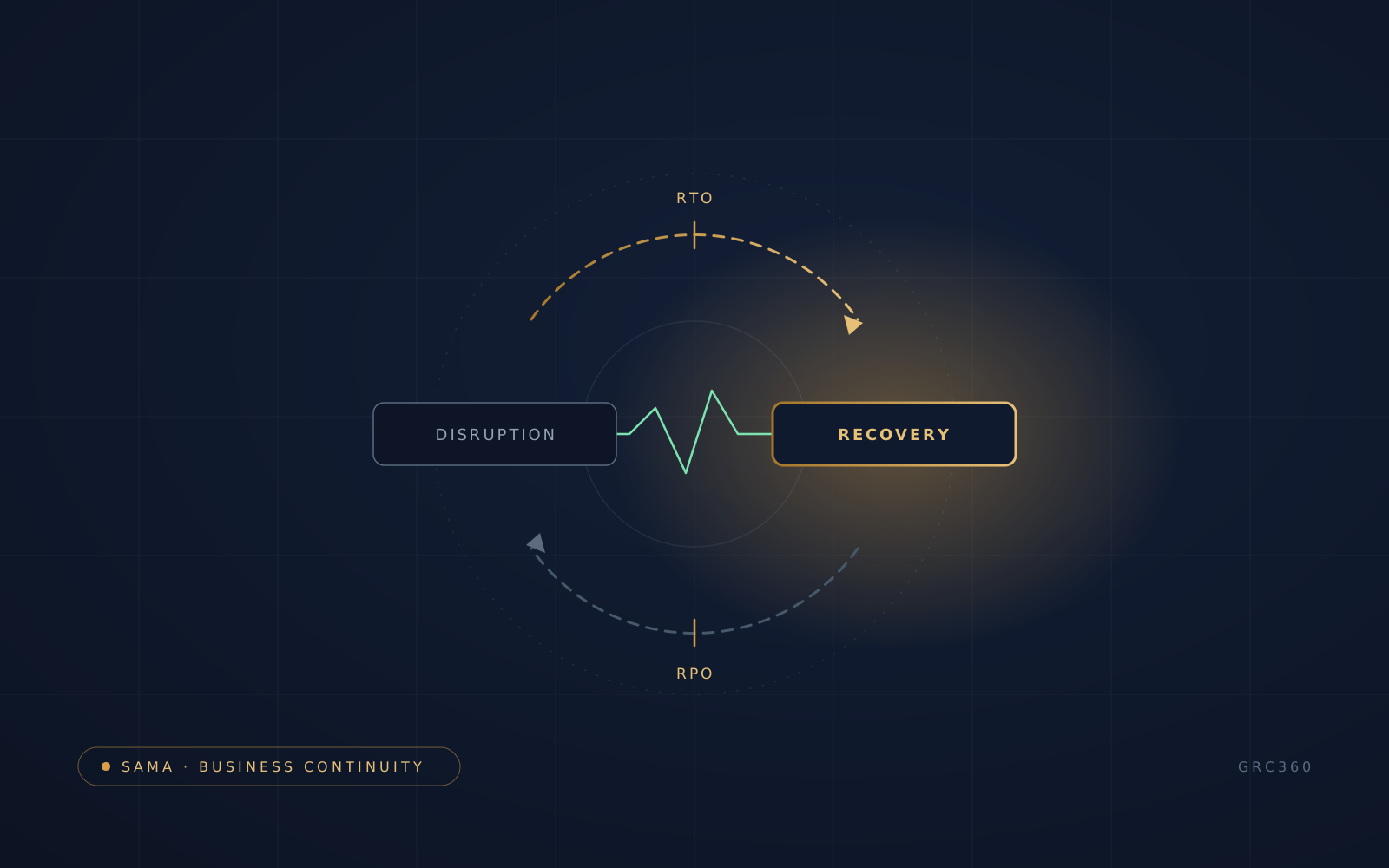
What is SAMA BCM?
The Saudi Central Bank (SAMA) Business Continuity Management (BCM) Framework is a regulatory mandate that ensures all financial institutions operating in Saudi Arabia maintain robust resilience and preparedness against potential disruptions. Introduced to strengthen the financial sector’s ability to respond to crises, SAMA BCM defines a comprehensive set of requirements that organizations must follow to continue delivering critical operations without significant interruption.
At its core, Business Continuity Management under SAMA is more than just a compliance requirement — it is a proactive strategy that protects financial stability, customer trust, and organizational reputation. It requires regulated entities to anticipate risks, implement structured plans, and validate those plans through regular testing and reviews.
By adhering to the SAMA BCM framework, financial institutions demonstrate their commitment to operational excellence, regulatory compliance, and long-term sustainability.
To Whom Does SAMA BCM Apply?
The SAMA BCM framework applies to banks and other member organizations regulated by the Saudi Central Bank (SAMA), as directed by SAMA’s circulars. This includes:
- Banks and financial institutions — ensuring that critical banking services remain available during system failures, cyber-attacks, or crises.
- Finance companies — protecting lending, credit, and investment operations against operational interruptions.
- Payment service providers — guaranteeing continuity of digital payments, electronic transfers, and fintech services in case of outages.
- Other SAMA member organizations — any organization to which SAMA directs the framework must align with its BCM requirements.
Insurance companies are no longer supervised by SAMA — the independent Insurance Authority (operational since 23 November 2023) is now the sole regulator of the insurance sector. GRC360 supports insurers in meeting the equivalent business continuity expectations under the Insurance Authority’s regime.
By applying Business Continuity Management principles across these sectors, SAMA ensures resilience not only within individual organizations but also across the Kingdom’s broader financial ecosystem.
BCM Structure under SAMA
The SAMA BCM framework is structured around several essential components. Each component plays a critical role in ensuring comprehensive Business Continuity Management and resilience.
BCM Governance
Strong governance is the foundation of BCM. SAMA requires organizations to establish oversight mechanisms, assign roles and responsibilities, and ensure accountability at all levels. Effective governance involves board-level involvement, management oversight, and dedicated continuity officers.
BCM Strategy & Business Continuity Policy
A documented strategy and policy outline the organization’s commitment to continuity. These set clear objectives, align with business priorities, and establish a framework for decision-making during disruptions.
Business Impact Analysis (BIA) and Risk Assessment (RA)
The BIA identifies critical business processes, recovery time objectives (RTOs), and dependencies. The RA evaluates potential risks, such as cyberattacks, natural disasters, or supply chain failures, that could impact operations. Together, these assessments form the backbone of continuity planning.
Business Continuity Plan (BCP)
The BCP documents step-by-step procedures to maintain essential operations during crises. It covers recovery strategies, resource allocation, emergency response, and coordination mechanisms.
IT Disaster Recovery Plan (DRP)
The DRP focuses on the recovery of IT systems, applications, and data. In today’s digital financial environment, IT resilience is critical to maintaining services like online banking, payment gateways, and customer records.
Cyber Resilience
SAMA emphasizes cyber resilience as an integral part of BCM. Institutions must be prepared to detect, respond to, and recover from cyber incidents while minimizing impact on customer services and financial stability.
Crisis Management Plan
A well-structured crisis management plan enables leadership to make fast, informed decisions during emergencies. It ensures communication with regulators, stakeholders, and customers while maintaining confidence and control.
Testing & Assurance
SAMA requires organizations to validate their continuity plans through rigorous testing. This includes:
- BCP testing — tabletop exercises and live drills to ensure operational continuity.
- DRP testing — simulation of IT recovery scenarios to test system resilience.
- Executed tests — documenting test results, lessons learned, and corrective actions.
Awareness and Training
Employees must understand their roles in BCM. Training programs and awareness campaigns help ensure staff can respond quickly and effectively during incidents.
Communication
Effective communication is critical in crisis situations. Organizations must establish internal and external communication strategies to keep regulators, employees, customers, and media informed.
Document Reviews
Regular reviews and updates of BCM documents ensure policies remain relevant and aligned with evolving risks and regulatory expectations.
Independent Assurance
External reviews and audits provide an independent assessment of the organization’s readiness, helping identify gaps and demonstrate compliance to regulators.
Our Methodology
We provide end-to-end SAMA BCM consultancy, audit, and compliance services tailored to your organization’s unique requirements. Our structured methodology ensures compliance, resilience, and long-term sustainability:
- Gap assessment — evaluating your current continuity and disaster recovery measures against SAMA BCM requirements.
- Framework development — designing customized governance structures, strategies, and continuity policies.
- Implementation support — helping develop BCPs, DRPs, crisis management frameworks, and cyber resilience measures.
- Business Impact Analysis (BIA) & Risk Assessment (RA) — conducting detailed assessments to identify critical processes, dependencies, and risks.
- Training & awareness programs — providing hands-on workshops and awareness campaigns to prepare your workforce.
- Testing & validation — executing BCP and DRP drills, analysing results, and recommending improvements.
- Compliance audit & assurance — providing independent audits and compliance reports for submission to regulators.
Our methodology ensures your organization not only complies with SAMA BCM but also builds a sustainable resilience culture.
Why You Need SAMA BCM Compliance
Compliance with the SAMA BCM framework is not just a regulatory requirement — it is a business necessity. Organizations benefit from:
- Regulatory compliance — avoid penalties and ensure alignment with SAMA mandates.
- Operational resilience — minimize downtime and maintain critical services during crises.
- Cybersecurity integration — enhance protection against growing cyber threats.
- Customer confidence — build trust by demonstrating readiness and resilience.
- Risk mitigation — reduce the likelihood and impact of financial, operational, and reputational risks.
- Competitive advantage — position your organization as a trusted, reliable entity in the financial sector.
In today’s dynamic risk environment, SAMA BCM compliance is key to maintaining stability, protecting stakeholders, and ensuring uninterrupted financial services.
Why Choose Us
Partnering with us for SAMA BCM compliance audit and consultancy services ensures that you are working with experienced professionals who understand both local regulatory requirements and global best practices.
- Specialized expertise in SAMA standards — extensive experience with SAMA BCM, CRFR, CSF, and MVC, ensuring deep understanding of regulatory expectations.
- Comprehensive end-to-end services — from gap assessments and remediation planning to audits and ongoing advisory, we provide complete compliance support.
- Tailored compliance strategies — customized solutions that align security and resilience requirements with your unique business model and operational needs.
- Proven track record in the Saudi financial sector — trusted by fintech startups, financial institutions, and regulated entities across the Kingdom.
- Practical and business-oriented approach — recommendations designed to achieve compliance while minimizing disruption and supporting long-term growth.